The Quiet Side of Daylily Season: Sixty Stone Mountain Without the Crowds
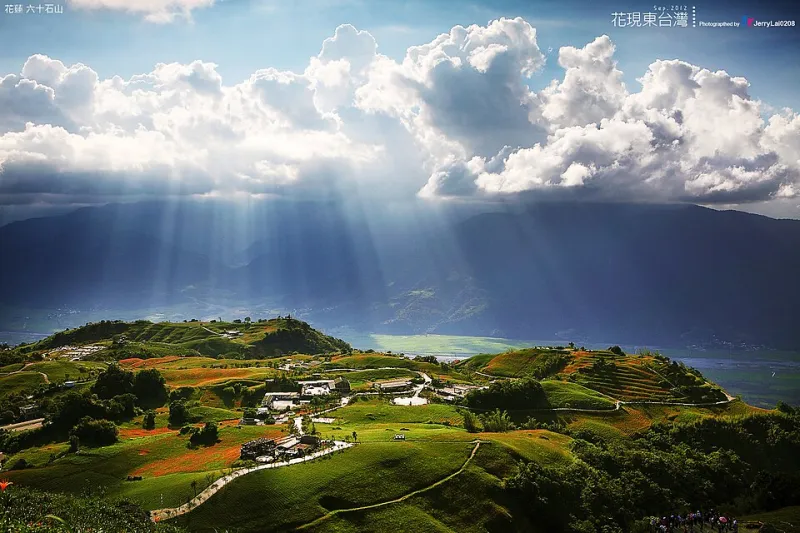
Photo: Jerry Lai from Hsinchu, Taiwan, CC BY-SA 2.0, via Wikimedia Commons
Sixty Stone Mountain — Liushidan in Chinese — is the kind of place that makes people reach for the word 'carpet.' Each summer, the terraced hillsides above Fuli Township in the East Rift Valley turn orange with daylilies, and the effect is less like a garden and more like someone pulled a quilt over the mountains. The catch is that everyone else has seen the photos too. On a peak weekend, the narrow farm roads can feel like a tailgate party with better scenery.
This is not a reason to skip it. It is a reason to approach it like a hiker instead of a tour passenger. With a little planning, Sixty Stone Mountain can still feel like a side trip rather than a stop on a conveyor belt.
Why This Hillside Is Worth the Early Alarm
The daylily fields here are working farms, not a landscaped park. That is exactly what makes them beautiful. The terraces follow the contours of the hill, the farmhouses sit close to the rows, and on a clear morning the Central Mountain Range stacks up behind the valley in layers. You are looking at agriculture and geology in the same frame.
For US travelers used to sunflower mazes and pumpkin patches, the scale is different. This is a crop grown on steep ground, harvested by hand, and turned into dried daylily products you will see in local shops. The flowers are edible, the farms are private, and the season is short. Treating the place like a photo set misses the point.
Timing the Bloom Without Chasing a Postcard
Daylily season generally runs from late June into August, with the exact peak shifting with weather, altitude, and the farm. Do not book a flight around a single Instagram date. Instead, build a window into your trip and check local bloom reports closer to arrival. Hualien tourism sites, farm social pages, and the small businesses in Fuli are better sources than a generic travel post from three years ago.
Early morning is your friend for two reasons: softer light and fewer buses. Aim to be on the upper roads by 7 a.m. if you can. Weekdays are dramatically calmer than weekends. If you must come on a Saturday, stay overnight nearby and start before breakfast rather than day-tripping from Hualien City at a civilized hour.
Weather matters more than crowds. A misty morning can be gorgeous, but heavy rain turns the farm roads slick and the terraces muddy. Check the forecast, wear shoes with real tread, and save the white sneakers for the night market.
Getting There Without a Tour Bus
The nearest practical rail stops are Fuli and Yuli. From Hualien City, the train ride south through the Rift Valley is part of the experience — rice paddies, betel nut groves, and mountains on both sides. From the station, you will need wheels: a local taxi, a prearranged shuttle, or a rental scooter if you have the proper license and mountain-road confidence. The climb is steep and narrow in places, so this is not the moment to learn to ride.
If you are relying on taxis, arrange your return pickup before you go up. Cell signal can be patchy, and the last thing you want is to be stranded at a viewpoint while the light fades. Ask your hotel or guesthouse in Fuli or Yuli to help. Many will know a driver who does the run.
A car works too, but park only in marked areas. Farm roads are not overflow parking lots. If a lane looks like it belongs to someone's driveway, it probably does.
Farm Etiquette That Actually Matters
Some fields charge a small entry fee; pay it. Some ask you to stay on specific paths; do that. Do not pick flowers, do not step into the rows for a better angle, and do not fly a drone over someone's property without permission. Daylilies are the crop. The photo is a bonus.
Buy something from the farm stalls if you can — dried daylilies, tea, simple snacks. It is a small gesture that keeps agritourism useful for the people doing the actual work. Pack out your trash, including fruit peels and coffee cups. And keep your voice down near farmhouses. People live here year-round, not just during bloom season.
A Low-Crowd Plan for the Day
Take an early train to Fuli, meet your driver, and head up before the tour groups arrive. Spend an hour walking the upper lanes, then find a farm stall for a slow breakfast or tea. Around mid-morning, when the buses start stacking up, descend to the valley floor. Visit a local rice field or a small cafe, or continue south to Yuli for lunch. Save the main viewpoint for late afternoon if the weather holds, when day-trippers are heading back.
If you have the time, stay overnight. The valley is quieter in the evening, and you get a second chance at a clear morning without the stress of catching the first train. That is the real luxury here: not a secret spot, but a slower schedule.